Tag: ‘migrants
International migration is certainly not a new phenomenon but in recent decades the volume of people moving between countries has increased substantially. The globalisation of the world economy, as well as improving transportation and communications, are key factors behind this increase. The World Bank estimates that over 200 million people live outside their country of birth – and that’s just the official estimate. Australia and Singapore both have a long history of international migration, and potential new trends have recently gained media attention in both countries.
The next article in our migration series looks at South Australia. Not traditionally a migrant destination, SA is becoming more diverse. This series of articles analyses the data available on the Department of Immigration and Citizenship website, to look at likely changes in the makeup of the population which we will see when the Census results are out next year. Local area information is available, which is very important for planning service delivery.
The next article in our migration series looks at Queensland, the sunshine state. In recent years, Queensland has had very large population growth, particularly in the south-east. My article “Who is moving to the Gold Coast?” looks at some of the population trends here. But Queensland is also am overseas migrant destination. In our final article in this series, we analyse the data available on the Department of Immigration and Citizenship website, to look at likely changes in the makeup of the population which we will see when the Census results are out next year. Local area information is available, which is very important for planning service delivery.
Tasmania is not often considered when it comes to migrants coming into Australia. It is true that the majority of migrants arrive into Sydney and Melbourne, but with the very large numbers of migrants in the past 5 years, many are settling in other areas. While Tasmania only accounted for 0.8% of all migrant arrivals since 2006, there are nevertheless some interesting trends. Read on to find out about them!
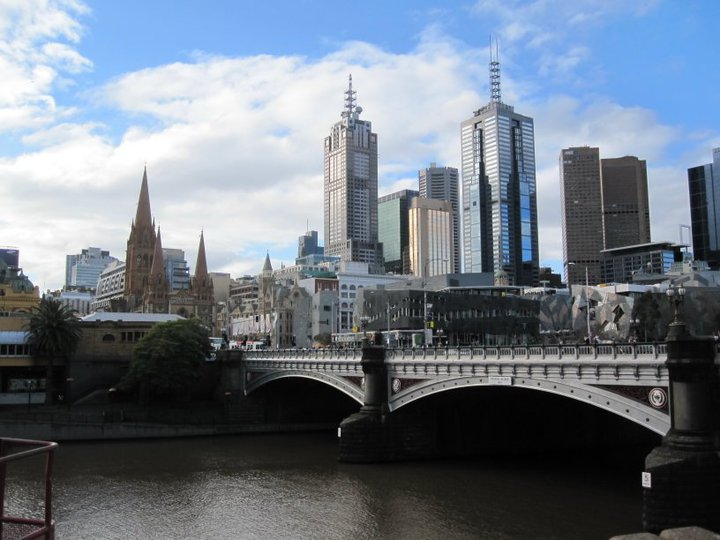
The next article in our migration series looks at the state of Victoria. This series of articles analyses the data available on the Department of Immigration and Citizenship website, to look at likely changes in the makeup of the population which we will see when the Census results are out next year. Local area information is available, which is very important for planning service delivery.
While New South Wales had the largest number of settler arrivals between 2006 and 2011, Victoria was not far behind, with just over 220,000 settlers, 26% of the national total (remember this doesn’t include people on student visas, or most people from New Zealand, as they don’t need to be granted residency). Victoria, along with Western Australia, gets a large share of migrants relative to its population size. Who are they and where did they settle?
The 2006 Census showed that about 4.4 million Australians were born overseas (22% of the population). In the last 5 years, we have had very high overseas migration, and everyone is now awaiting the 2011 Census results to see how the make-up of Australia has changed. My recent “Crystal Ball Gazing” article gives 10 predictions about the Census results. Many of those predictions aren’t outright guesses, but are based on some hard evidence we already have. The total population growth (#2) and the origin of migrants (#5) are among these.
So, before the Census data become available, it’s worth having a look at where these migrants are coming from, which state they’re going to and how they are changing the cultural makeup of Australian society.