Tag: ‘age profile

Census 2011 – the pyramids of age

Posted by Simone at 7:30 am on September 11, 2012

One of the most important indicators of the demand for services is the age structure of the population.  Australia has an ageing population as evidenced by the increasing number and proportion of persons in the older age groups.  But the delivery of many services is often predicated on the age structure of larger geographic regions (I’m often amazed at how some policy people in government consider that states are small geographic areas!), and this ignores the wide variations in the age structure than can occur even within local government areas.  We recently had a guest blogger highlight the implications of the changing age structure in inner northern Melbourne and the impact on school services.  This blog will show examples of age structures for smaller communities (SA2 level) and what this might mean for service delivery.

Read the rest of this entry

Census 2011 – where do retiring baby boomers live?

Posted by Simone at 7:30 am on August 2, 2012

In one of our previous Census blogs, we drew attention to the fact that 60-64 year olds were the fastest growing five year age cohort between the 2006 and 2011 Censuses, due mainly to the baby boomer generation ageing over time.  Population wise, NSW is Australia’s largest state and the growth of the 60-64 year cohort was similar to the national figures.  Let’s have a closer look at some of the characteristics of this older cohort of baby boomers.

Read the rest of this entry

At .id we like 25-29 year olds – not because that’s how old we are – but because they are possibly the most challenging age cohort to define demographically.  Much as the media would have us believe, they don’t conform to a “Gen-Y” stereotype.  They are incredibly diverse in terms of their living and employment arrangements, marital status and other demographic characteristics.  One of our previous Census blogs showed that 25-29 year olds were one of the fastest growing age cohorts in the last intercensal period, recording nationwide growth of 18.6%.  However, in Western Australia this age group grew by 34.6% over the last five years – almost twice the national average!  These sorts of figures certainly warrant closer investigation – hence a closer look at 25-29 year olds in Western Australia.

Read the rest of this entry

Census 2011 – Tasmania is the oldest state

Posted by Simone at 8:00 am on July 10, 2012

Perhaps because it is the smallest State, Tasmania is often neglected in population analyses yet there are some significant demographic trends occurring.  Data from the 2011 Census shows that on the measure of median age, Tasmania ranks at the top of the list of all States and Territories with a median age of 40 years.  This compares with 37 years for Australia as a whole.  In 2011, a total of 10,240 persons were aged 85 years and over in Tasmania.  Though this represents just 2.1% of the Tasmanian population, this age group has particular service needs relating to health and housing.

Read the rest of this entry

Census 2011 – where do the children play?

Posted by Simone at 8:00 am on July 5, 2012

Much has been made in the media in recent years about a baby boom, baby bounce – whatever fancy name you want to give it – but there’s no doubting the evidence base. In the last ten years or so the total fertility rate (TFR) in Australia has climbed up from the lows recorded in the 1990s.   What trends are evident in Victoria and what does it mean for children’s services?

Read the rest of this entry

Census 2011 – our ever changing age structure

Posted by Simone at 8:00 am on July 3, 2012

How old are you?  Some would consider this a personal question but there’s no getting away from the fact that our age is part of who we are.  The age structure of a population is an important determinant as to services demanded, policies implemented and consumer behaviour.  This blog will examine how Australia’s age structure has changed over the last three Censuses and what this might mean…

Read the rest of this entry

How much older can we get?

Posted by Matthew at 6:30 am on February 21, 2012

We are living longer than ever before but there is significant controversy regarding the likelihood of continued increases in life expectancy. In general terms, survival rates (share of persons living to next year by age) have increased in all age groups leading to higher life expectancy for both men and women.  How much older can we get?

Read the rest of this entry

Well the Census has been done, and we’ve had a lot of interest in why we’re excited about the 2011 Census and what it might show.

So here are some predictions, not official .id forecasts, but just my own opinions, of what the results of the recent 2011 Census will show. I will revisit them when the data is released and see how accurate or completely wrong I was!

Read the rest of this entry

Hawkesbury – Sydney’s largest council by area joins .id

Posted by Glenn at 9:52 am on August 24, 2011

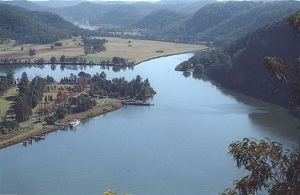
.id is pleased to welcome the City of Hawkesbury, population 64,030, to the .id community! With the addition of Hawkesbury, all councils in Western Sydney now subscribe to one or more .id products. The Hawkesbury Community Profile and Hawkesbury Social Atlas have just gone online.

Read on for more information about Hawkesbury.

Read the rest of this entry

Posted in:
Uncategorized

Being an Arts student who barely turned 21, statistics and numbers can be mindboggling – worse still, intimidating. I never thought one day I’d be working with a spatial and demographic analysis company like .id. When I applied for the job, I honestly didn’t even know what ‘spatial analysis’ was. Sounded like a sophisticated way of saying ‘geography’. But in the short period that I’ve worked here (here comes the cliché but earnest part), I learnt a lot about why these (horrendous) numbers matter to our society. And why I think everyone should be excited about the census. On a sadistic (and of course, joking) note, don’t you feel happy that 30minutes of your time filling in the census form would torture statisticians and demographers for the next 5 years to translate them into meaningful information for our use?

Read the rest of this entry

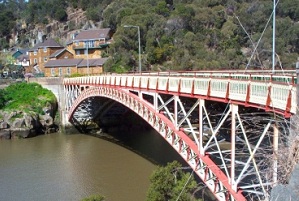
Residents of Launceston are younger than the Tasmanian and Australian average, but the ageing of the baby boomers is the dominant population trend. The area is relatively low income but with an increasing high income population, and it attracts people into the area from across Northern Tasmania, and from interstate, particularly from New South Wales.


Read the rest of this entry

Who is moving to the Gold Coast?

Posted by Glenn at 11:08 am on March 8, 2011

The Gold Coast is an iconic Australian place, which most Australians have some familiarity with. As of June 2009, the Gold Coast was the largest non-capital city in the nation, and the 6th largest city over all, with 578,000 people (including the Tweed area in NSW), and growing faster than any of the state capitals, and any other city in Australia with a population over 100,000 people, with the exception of Cairns.

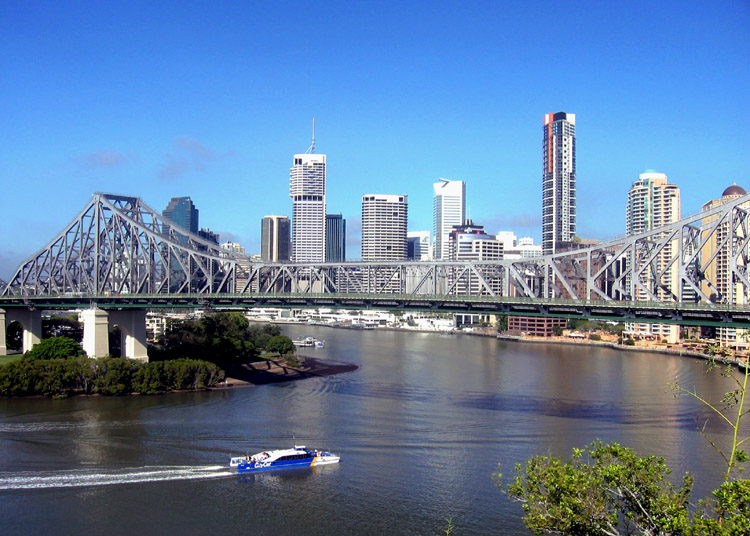
Who is moving to the Gold Coast?  Most people will tell you it’s retirees.  What does the data reveal? Read the rest of this entry

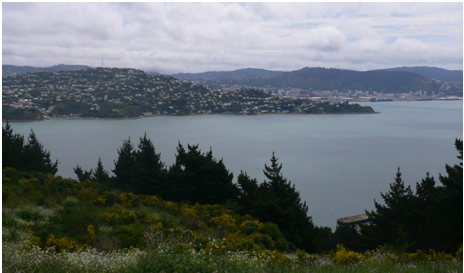
Having recently begun .id’s first overseas foray, Johnny, Lailani and I went to Wellington to launch the first New Zealand profile.id site for the City of Wellington.  The Mayor Celia Wade-Brown made an eloquent presentation, backed up by some great press from the local paper. 

“The profile enables us to have the mazimum confidence in the decisions we make, to manage our assets to meet changing demands of changing populations and allocate resources where they are most needed.”

At these events it is always ideal to find a good news story from the socio-economic data which, as it turns out, was a pretty easy task for the City of Wellington.

Read the rest of this entry

Posted in:
New Zealand