Category: Fun Stuff
At .id we usually present and discuss demographic information about cities, towns, regions and even countries.
But there’s a growing population of people who are not even on the ground – those people who are currently, at this moment, flying somewhere in an aircraft.
So what is the population of this group – and where can you see all their flights represented on an interactive map?
Maybe it says something about the type of person I am, but even on holidays my professional life manages to come to the fore. It’s really more about my interest in cities and places, and what makes them tick. I’ve recently returned from Russia where I spent time in Moscow and St Petersburg, two of the more interesting cities on this planet (in my humble opinion). Not only did some of the critical events of the twentieth century happen on Russian soil, but they also have an interesting demographic history and there are aspects of these cities that Australia could learn from.
You know the monkey ladder story, right?
It’s essentially a parable about resistance to change, but it actually does have a basis in a psychology experiment.
The story varies, but essentially it goes like this:
There was a cage containing five monkeys. Inside the cage, there was a banana hung above a ladder.
Of course, soon after the banana was suspended, a monkey went to climb the ladder to get to the banana. As soon as he started up the ladder, the psychologists sprayed all of the other monkeys with ice cold water.
Happy ANZAC day! ANZAC stands for the Australian and New Zealand Army Corps. And today, on 25 April, we honour those who served and died in wars, conflicts, military and peacekeeping operations. The current ANZACs are fighting for 23 million Australians. That’s right: Australia hit another population milestone two days ago on 23 April 2013 with 23 million people. In this blog, we’ll look at how many Australians were the ANZACs protecting at their time.
A while ago, Jim wrote a blog about the Google Glass and what it can do. Before we know it, earlier this year, Google released its first developer’s version which could be bought at approximately USD$1500. Google has also confirmed that by the end of 2013, everyone would be able to purchase a pair (hopefully way under USD$1500). But… will Australia catch the fever?
Happy International Women’s Day! Every year on 8 March, the world comes together to celebrate the achievements and equality of women. While there’s much testosterone at .id, and that the number of women can be counted with slightly more than one hand (there are seven of us – nonetheless, .id is an equal opportunity employer), we sure do know a thing or two about Australian women.
There’s a growing trend around the world (especially since the GFC) to adopt a simpler lifestyle, with less “baggage”.
Many people in the developed countries are seeing the benefits of having less financial commitments, a less cluttered lifestyle and more leisure time to pursue their favorite activities.
Part of this trend has extended to housing. Despite Australians seeking larger and larger houses (see Simone’s blog on the Australian tendency towards even more bedrooms) there are some around the world who are doing the opposite, and reaping the rewards of a lower (or no) mortgage, less space to clean and a home that’s much easier to maintain.
This trend often goes hand in hand with higher density dwellings, and the need for smaller houses to use their limited space more efficiently.
Some time ago we published a blog about the “cube” a design study of a fully-functional house that is just 3m square.
But a new design, called the “roll-it” is even more innovative, and makes even more use of limited space – but to me, it seems more like the international Space Station than a home.
Would you want to live in it?
Read on to find out….
As users of the .id tools, you would be used to providing sound, verified information for use in making evidence-based decisions. In doing so you would often come across other commonly held views or opinions based on rumour, misinformation or just old data – which you use the .id tools to try and dispel.
The well-known Australian slang term for such mistruths is a “Furphy”. But just where does this term come from, and what does World War 1 have to do with it?
Two of the main aspects of “money” are a medium of exchange and a measure of value.
In Economics, Cliff’s Notes provides a good definition: “providing a common measure of the value of goods and services being exchanged. Knowing the value or price of a good, in terms of money, enables both the supplier and the purchaser of the good to make decisions about how much of the good to supply and how much of the good to purchase.”
But it seems in recent times, other items or common purchases have become a measure of value in themselves. One of these, especially lately, seems to be a cup of coffee.
It seems that every day, we are enticed to buy things on TV, radio or print advertising for “less than the daily price of a cup of coffee”.
For example, many types of insurance can apparently be had for less than the price of a cup of coffee per day.
But how much does this represent, and does it make sense to make this comparison?
Since the release of the 2011 Census results we’ve been commenting (and blogging) about the massive population growth in Australia since 2006, particularly in Capital cities and surrounding suburbs.
Along with this population growth has come increased density in many areas, and of course more urban sprawl.
How would you feel if you lost your car keys? Or your laptop? Pretty bad, right? But I bet you’d feel more uncomfortable if you lost your mobile phone. You’d feel suddenly disconnected from the world, unsure if someone is trying to contact you. You’d feel anxious because you can’t keep in touch, you can’t stay updated on world (or local) events, and you can’t check your Facebook.
At .id, we advocate the use of our demographic and economic tools to make evidence based decisions. It’s important to remember that often, this evidence may fly in the face of established “myths” and commonly held views, many of which may have been around for some time.

Australia currently has 564 local councils, although with amalgamation on the agenda that number is likely to change.
But where was the first council, and when was it established?
It’s true – and apart from being a weird, interesting fact that you can use at your next quiz night, it indicates a much broader issue – an ageing population in a country with little immigration. As a result, Japan have a massive ageing population, with only natural childbirth to provide new additions to population. What other “paradigm shifts” are we seeing “for the first time” in 2012?

Necessity, they say, is the mother of invention. This has never been more true than in the case of the US Census of the late 1800’s, which in many ways set the wheels in motion for the development of the modern computer.
It’s fun, but also interesting and entertaining to look at what the futurists and planners had in mind for the future of transport development back in the late 50’s.
NBN Co and the Federal Government have been raving on for a while about the Digital Economy in their “Digital Economy strategy”.
So what is it, and what’s the big deal?
The ever-increasing reliance on motor vehicles for personal transport is a challenge for most council areas. Extra traffic creates higher road wear, and congestion leads to increased potential for accidents and longer commute times. Then there are the environmental issues such as the use of of larger amounts of fossil fuel, carbon emissions and more. And then of course there is parking…

Last week I received an email from Harvey. He wrote that he’s a regular reader of our blog and hoped we would publish a post about his new non-profit Liberty City Group. It’s objective is to gather support for building a new city in Australia’s unpopulated north. I thought – wow – this man has grand ambitions! I read his blog, passed it on to some of my colleagues and it generated a heap of discussion about the merits of the idea and the details of the one proposed by Harvey. We thought our readers might like to join in the discussion.

The proverb ‘Curiosity killed the cat…’ is no doubt full of wisdom as proverbs are, but I frequently despair at the lack of curiosity people display. Who would discourage anybody from being curious? Being curious is the key to being creative. Not being curious is a dull way to approach life.
Much has been written about the celebrated architect, engineer, designer, author, free-thinker and futurist, Buckminster Fuller. But what will probably interest .id insight readers most is the role he played in influencing modern urban design, and to a much lesser degree, automotive design!
It was a year ago this week (Dec 23rd) we posted the first article on this blog, entitled “Should I use enumerated or usual residence data?“. The blog was conceived as a way to share the information we get from our work with so many councils around Australia (over 220 at last count), and actually get some discussion going on some really interesting demographic topics. So now the blog is a year old, it’s worth having a quick look at where we’ve come from and where we’re going.
Christmas is round the corner and the shopping frenzy has begun! Coming from a traditional Buddhist family, I have never formally celebrated Christmas. The emphasis here is “formally”. In other words, I still receive gifts from family and friends (though this dwindles as you grow older), go to parties, perhaps have some turkey, etc. I’m Christmassy and all just that I don’t go to church, do the carolling bits and have a Christmas tree at home (Mum thinks it’s troublesome but I’m still advocating it because it’s pretty!) So how many in Australia actually celebrate Christmas for “the birth of Christ”?
The late 1950’s was a period of unbridled optimism and consumerism, as new products poured onto the market almost daily. The pace of change was relentless and it seemed that people were always looking for the next “big thing” to make their lives easier. One of the emerging technologies of the time was plastics. They were being seen as the panacea to all ills and they were predicted to take the place of many other existing materials.
Shopping is no doubt one of my favourite sports (Note: I consider it a sport because after shopping for a day, my legs ache as much as jogging 4 kilometres). And reading this (refer to original article here) wasn’t all that pleasant:
“According to the study, 58.5% of respondents believe customer service has declined in the last five years, while only 17.4% say it has improved.” - By Michelle Hammond from SmartCompany
It all started with a couple of guys you may have heard of – Thomas Edison and George Westinghouse, way back in the 1880′s. (incredibly – the companies they founded still exist in some form today, as General Electric and Westinghouse)
If the prototype VACTRAIN being developed in China becomes a reality, aeroplane speeds (or more) in train travel may become commonplace, making possible travel from Melbourne to Sydney in less than an hour, or even Sydney to Perth in not much longer….
Would 10 million people in Australia live in a caravan park? That’s right, about 50% of the total population. If so, we’d certainly need more caravan parks.
In a class I attended few days back, my tutor gave us a handout about unpaid work in Australia taken from 1997 statistics collated by the Australian Bureau of Statistics (ABS). The abstract, which I sussed out from Google after class, read (For the full media release, click here):
“The value of unpaid work – 91 per cent of it unpaid household work – was about $261 billion in 1997, equivalent to about 48 per cent of Australia’s gross domestic product (GDP)… Unpaid household work contributed $237 billion (or 91 per cent) to the total value of unpaid work in 1997. Females accounted for 65 per cent of the value of unpaid household work.” – Source: Australian Bureau of Statistics (ABS), 2000, Media Release
Australian houses are getting bigger. In fact, despite falling average household size during the same period, the average Australian new home is over 40% bigger than those built just 25 years ago. This problem is not only Australian, and a University in the UK, the University of Hertfordshire, is taking a stand by designing a fully liveable house that takes up just nine square metres of space.

The Inca Census and the Quipu …

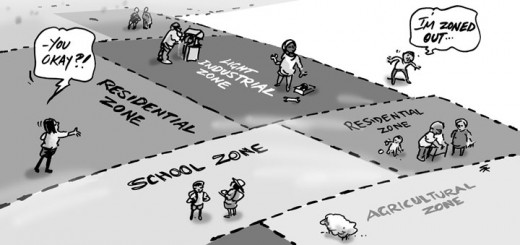
Modern day urban planners face the challenges of a growing population, catering for families, singles and ageing residents, increased numbers of tourists and much more. They need to establish areas for residential housing, mixed with business zones, schools and ample recreation facilities.
Happy Star Wars Day everyone – May the 4th be with you!….In line with this theme, here’s a brief look at the “Jedi” phenomenon and how it affected the Australian Census.
Prior to the 2001 Census, a bunch of Star Wars fans around the world decided that it would be good to get “Jedi” recognised as an official religion. For some reason, someone decided that if 10,000 people in the country put down a religion on their Census form, it would suddenly be recognised as an official religion (presumably with tax fee status for Yoda, and a nice office overlooking the harbour).
Earlier this month, Ford (USA) released a list of what it considers to be the 25 “most prepared” cities in the USA for electric vehicles. How would your city stack up?
Hmmm… is this a list of areas that .id has profiled or forecasted? Well some of them are, but not quite. They are in fact the weird and wonderful destinations from a 1980s Melbourne Comeng train destination roll. This handsome piece helps decorate the office at .id and provides a unique insight into Melbourne’s railway network (existing and proposed) in the early 1980s. Read the rest of this entry